Artwork Blog Post Due 9/1/2020
https://smarthistory.org/paintings-from-the-tomb-chapel-of-nebamun/
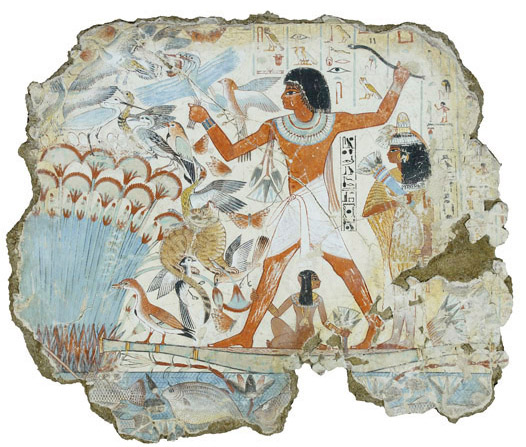
This artwork comes from the walls in the tomb-chapel of Nebamun. Nebamun is shown to be hunting on a boat with his wife and daughter. In Ancient Egypt, art was not created to be shown off. Instead, it was created for the benefit of a person. Furthermore, it is easy to assume that this piece was in a more hidden spot of Nebamun's home where fewer people were able to see. Pieces like this provided a place for individuals to manifest what they had wished for. Therefore, this artwork was probably created by Nebamun because this is something that he wished for himself. He wished for him and his family to have an abundance of food for eternity so they could live healthy and happy. This ideology is interesting to me because today we are drawn to the most "trendy" or "flashy" artworks. However, this was not the case in Ancient Egypt. Egyptians believed that their art served a purpose for their future, not just for the human eye.
The readings from this week explain that Egyptian art was arranged in parallel lines called registers. Their purpose is to separate the scene, which keeps it organized. The only time registers were not used was when an artist wanted to express chaos, such as in a battle or in some hunting scenes. Through out this piece, those parallel lines are very clear to me. I think it is interesting that this was a "rule" in Egyptian artwork. However, I can gain an appreciation for it because it makes the artwork easy to follow so I can interpret what is going on. Although this is a hunting scene, I believe that their is still a use of registers because it does not appear to be violent. Rather, the artist is expressing that his abundance in food is a good thing for him and his family.
Since religion was very important to the Egyptians, I can assume that Nebamun created this piece to manifest what him and his family's after life would look like. This can be interpreted because the readings also mention that art was created to receive the benefit of ritual action. Nebamun created this piece so he could manifest a fruitful afterlife for himself. At a quick glance, this artwork seems meaningless. However, when you dive into it, this piece meant so much for individuals at the time.
1) Museum, The British. “Paintings from the Tomb-Chapel of Nebamun,” 2020. https://smarthistory.org/paintings-from-the-tomb-chapel-of-nebamun/.

Comments
Post a Comment