Etruscan Artwork

https://ka-perseus-images.s3.amazonaws.com/307599fd648993c7194dd5e89e7da1b9b3fcdfd2.jpg
https://ka-perseus-images.s3.amazonaws.com/8b34bfc0dd24271a3a4f7138b2c0154e5148f97a.jpg
In my last blog post, I talked about artwork from Greece. The Etruscans, alongside the Greeks, were the first two powers to develop the earliest and most successful cities in Europe. The Etruscans had a great influence over the Greeks. The Greeks inherited gladiatorial combat, hydraulic engineering, temple design, and religious rituals, and more from the Etruscans. Phoenicians and Egyptians also had similar ideas and artistic vocabulary. The Etruscans had religious beliefs that influenced their art. The Etruscans believed that when someone died, they were believed to be cremated and provided a new home in the afterlife.
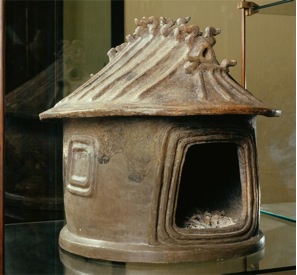
The piece of art on the left was known as a 'hut hurn', which was a home for the dead during this time period. This 'tomb' was created in 800 B.C. and was made of clay. As the Etruscans became more wealthy after trading their natural resources, their tombs became more extravagant. It is evident that art was very important to the Etruscans. The Etruscans prioritized their art because their money was put into their creations. Tombs went from large ash trays for cremations to fancy wagons, which is shown in the picture on the left. This piece from 650 B.C.E. is known to be a bronze bed for a woman of the dead. Some other unique tombs were dressed in rich goods such as jewelry because the Etruscans believed that the dead brought their tombs with them into the afterlife. Therefore, it can be interpreted that this woman would bring her four-wheeled bronze sheathed carriage into the afterlife with her.
I think it is interesting that even though the Etruscans existed so long ago, some of their beliefs are still alive today. Christianity is a widespread religion in our society which also believes that people live their lives on Earth to reach an eternal world once they die. On top of Christianity, I know that there are many other religions today that believe in an afterlife. I also think it is surprising that the Etruscans valued art so much that they spent money on their creations instead of other things.
I wonder if the Etruscans were on of the first people to bring up the idea of an afterlife?

I had no idea the Greeks were influenced by the Etruscans, and picked up Gladiatorial combat, hydraulic engineering, temple design and the other aspects of what made the Greeks, Greeks from the Etruscans. That was very interesting to learn about, I also think it was pretty cool how they mainly used their money to create pieces of art, especially in burials. Something I think is very cool because they used up so much time and effort, in order to make sure, they made it to the after life safely.
ReplyDeleteThis is interesting to know that the Etruscans believed that in the afterlife that what was by their tomb would follow in the afterlife. Religion from both perspectives seems to have been built from so many viewpoints that are like you said still used in other religions today. That is a good question to ask if they were the first to bring up an afterlife in this way. Was their belief of afterlife influence as well by the Greeks or on their own?
ReplyDelete