Textile Arts

|
| Weaving with traditionally dyed alpaca wool, Chinchero, Peru (photo: Rosalee Yagihara, CC BY-NC-ND 2.0) |
Textile arts were a popular form of art among the ancient people in the Andes. The Andes is a mountain range that runs along the west coast of South America. The ancient people of the Andes developed textile technology, and then ceramics and metallurgy shortly after.
The techniques used to create textile fragments evolved from simple twining to complex woven fabrics to double-faced cloths and lace-like open waves by the beginning of the first millennium. Double-faced textiles were so precise that you could not tell the difference between the front and back of a fabric. Therefore, this technique was used for pieces such as blankets. The first textile fabrics were made by fibers from reeds, which quickly turned into yarn that was made from cotton. Obtaining cotton was convenient in the Andes because the mountains provided good farming spots, and the alpacas in the highlands provided people with soft, strong wool. Cotton was cultivated in several colors: white, brown, or blue, while wool from the alpacas was white, brown, or black. The ancient Andeans also dyed the cotton and wool to produce more colors.

Detail of border figure 61, Nasca, Mantle (“The Paracas Textile“), 100-300 C.E., cotton, camelid fiber, 58-1/4 x 24-1/2” / 148 x 62.2 cm, found south coast, Paracas, Peru (Brooklyn Museum)
The picture above depicts a close up of a textile from Paracas, Peru. This close-up shows that the details that are within these textiles are very intricate. I can assume that this form of art played a huge role in Andean culture. Weaving these pieces was probably something the Andean people did on their free time, and these textiles were expressed in everyday objects such as blanket, sweaters, bags, etc. In fact, last year I went to Honduras (which is very close to South America) and bought a purse as a souvenir. The purse that I bought replicates the technique and design shown in the first picture above. This is fascinating because although textile technology has been around for a long time, it is still alive.
Textile arts were popular among the ancient Andeans, and their legacy still lives. These fragments have evolved from simple pieces to complex
References
“Paracas Textile,” 2020. https://smarthistory.org/the-paracas-textile/.
“Introduction to Andean Culture.” Smarthistory, 2020. https://smarthistory.org/intro-andes/.


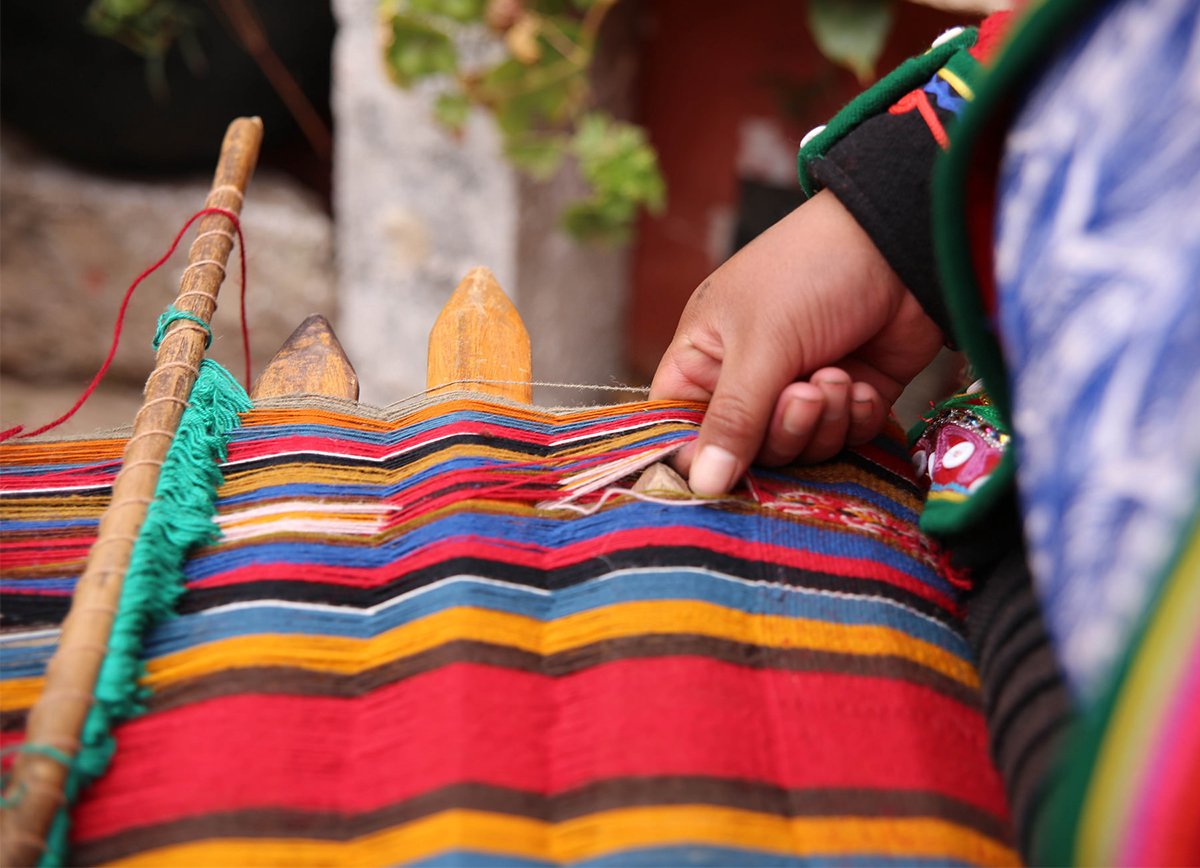

The textile art you displayed is beautiful! I loved reading about your personal experiences with these artistic cultures and the impact it has left on you. Overall, a very informative and fascinating post.
ReplyDelete